Your Open Tabs Are a Memory System: Capturing Why Context Mattered
The tabs you keep open for days are placeholders for intent your tools forget. A look at why knowledge workers hand-build AI memory systems, and what a real one should capture.
Open your browser right now and count the tabs you have kept alive for more than a day. Most of them are not tabs at all. They are reminders you could not phrase as a task, articles you meant to read once you had the energy, and research trails you are afraid to close because closing them would erase the reason you opened them in the first place. The tab is a placeholder for a thought.
This is what an ad hoc memory system looks like. Nobody designed it. It accreted, one deferred decision at a time, until the tab bar became a fragile externalized to-do list that a browser crash can wipe out. The same instinct shows up everywhere knowledge workers touch AI: pinned chats, a folder of PDFs, a prompt library in a note, a screenshot reel of "the day." We are all building memory systems by hand, badly, because the tools we use forget everything the moment we move on.
The deeper problem is not storage. It is that the part we most want to keep is the hardest to write down: the why. Why this tab mattered, why we saved this thread, why a draft went the direction it did. Files survive. Intent evaporates.
The source signals for this post include thread 1, thread 2, thread 3, and thread 4.
The tab is a thought you could not finish
The pattern is consistent. Someone keeps a dozen tabs open for days because each one stands in for something they have not decided yet. One is a read-later article. One is a half-finished comparison between two tools. One is a thread they want to come back to when a related project starts. The tabs are not the work; they are the unresolved edges of the work.
Closing a tab feels like a small loss because it is. The URL is recoverable from history, but the context is not. You cannot search your browser history for "the tab I opened because of that conversation about caching, the one I wanted to test against the staging config." The link survived; the reason did not. So the tab stays open, and the cognitive cost of keeping it stays open with it.
People cope by bookmarking, by sending links to themselves, by dumping everything into a read-later app. These help with retrieval and do nothing for intent. A bookmark folder with two hundred entries is just a different shape of the same forgetting. What is missing is a place to write down, at the moment of saving, the single sentence that explains why this thing earned a slot in your attention.
Recording the day is not the same as remembering it
A different instinct shows up among people who build local-first desktop tools that watch their own activity. These apps record which applications were focused, the titles of windows, the URLs visited, periodic screenshots, and OCR of what was on screen. At the end of the day they produce a report: here is where the hours went, here is the sequence of what you touched. Crucially, the people building these tools insist on keeping all of it local. No cloud, no upload, because a literal recording of your screen is the most sensitive data you own.
This solves a real problem. If you lose the thread of a day, you can reconstruct it from the trail. You can answer "what was I actually doing between two and four" without guessing. The local-first constraint is not paranoia; it is the only honest design for a tool that sees everything.
But a recording of activity is still raw material, not memory. It tells you that you spent forty minutes on a documentation page and then switched to a config file. It does not tell you what question you were chasing, whether you found the answer, or why you abandoned it. The screenshot preserves the surface and loses the intent underneath. Reconstructing the what of a day is genuinely useful. Reconstructing the why is what actually lets you resume.
Talking to your own notes without renting your privacy
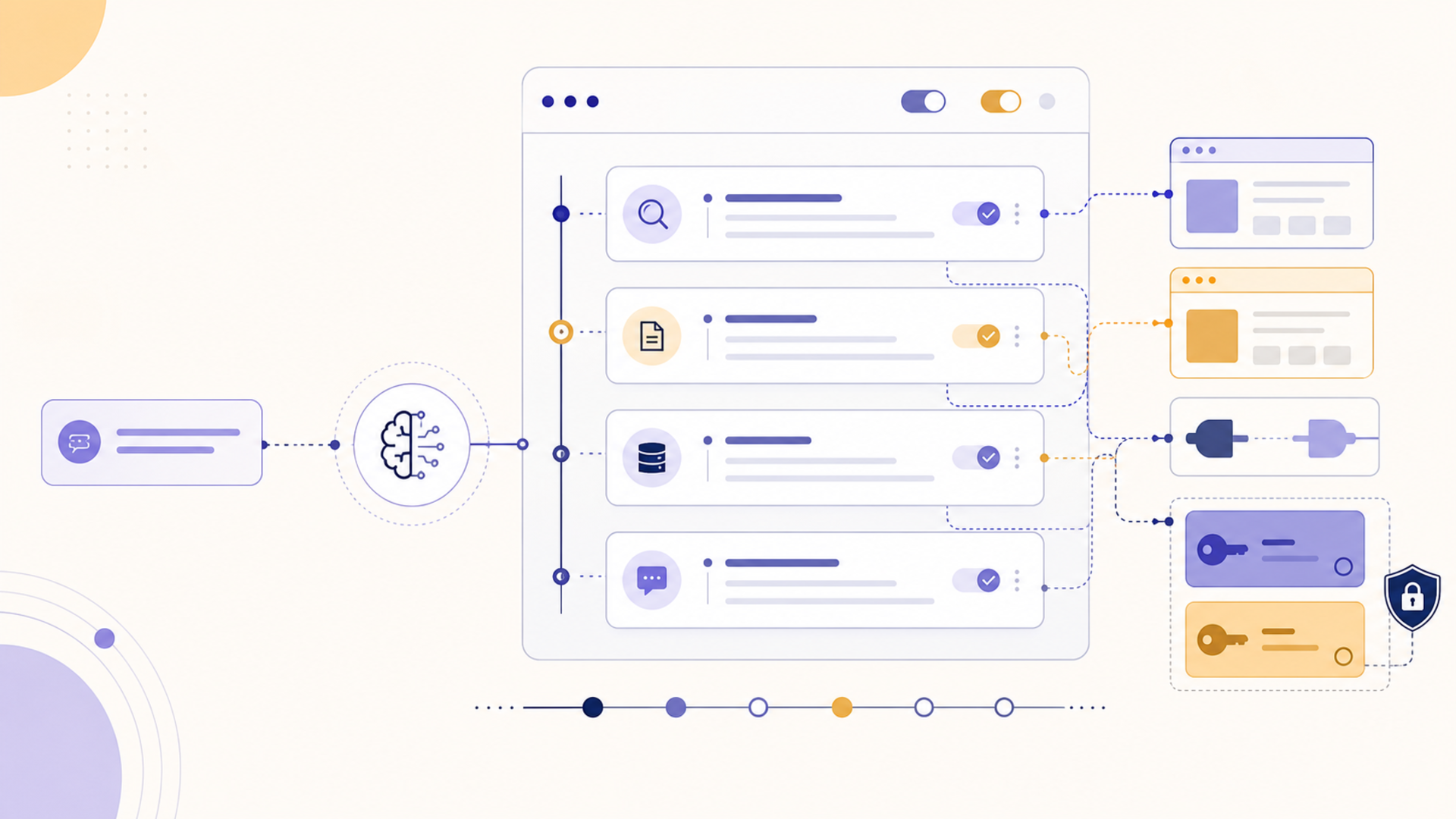
The third pattern is a Mac AI workspace built so you can chat with your own notes and PDFs, get answers with citations back to the source, and keep everything organized in a vault. The explicit motivation, stated plainly by the people who build and use these tools, is to avoid feeding personal drafts, half-formed ideas, and private documents into cloud models.
This is the productive middle path. You want the leverage of a model that can read across your material and answer questions. You do not want that material to become training data, or to sit on someone else's server, or to leak through a chat history you cannot fully audit. Local inference over a local vault gives you the reasoning without the exposure. Citations matter here too: an answer you cannot trace back to a source is just a confident guess, and for your own knowledge base, confident guesses are worse than no answer.
What this pattern gets right is the unit of value. It is not "store my files." It is "let me ask my own work questions and trust the answer." That requires the files, the structure around them, the provenance of each claim, and a guarantee that none of it leaves the machine. The vault is not a folder. It is the boundary between your context and everyone else's model.
Why tags decay and links do not
The fourth signal is an old argument in the note-taking world, sharpened by people who have lived with their systems for years: prefer links and notes over tags, because the meaning of a tag decays over time. You tag something #research in January. By June you have three competing ideas of what #research means, half your notes are mis-tagged, and the tag no longer partitions anything. The label drifted while the notes stayed still.
Links behave differently. A link between two notes is a specific claim: this relates to that, for a reason you can usually reconstruct from the surrounding text. The connection carries its own context. Even years later, a link says "these belong together" with far less ambiguity than a tag that has been stretched across hundreds of unrelated items. Structure built from relationships ages better than structure built from labels.
The lesson generalizes well beyond Obsidian. Any memory system that relies on flat categories will rot, because categories are promises about the future you cannot keep. Systems built on explicit relationships and captured intent rot slower, because the meaning travels with the connection instead of floating above it.
Where 1AiVault Fits
Each of these patterns is someone hand-building one corner of the same missing layer: a private memory system that captures why, not just what. 1AiVault is built to be that layer directly. It captures and imports context from where it already lives, notes, PDFs, saved threads, chat exports, prompt libraries, project context, and keeps it organized in a vault you control.
The design choices map onto the problems above. It is local-first, so personal drafts and private documents stay on your machine instead of feeding cloud models, the same constraint the activity-recorder and Mac-workspace builders arrived at independently. It is oriented around surfacing the why behind your work, so a saved thread carries the reason you saved it, not just the URL. And because it is MCP-compatible, the context is portable across the AI clients you actually use, instead of being trapped in one app's history. The tab you could not close, the day you could not reconstruct, the note you could not trust, those become recall you can query.
| Approach | Captures the why | Local / private | Portable across tools | Ages well |
|---|---|---|---|---|
| Open browser tabs | Partly (in your head) | Yes | No | No |
| Bookmarks and read-later apps | No | Varies | No | No |
| Activity recorders (screen / OCR) | No | Yes | No | Partly |
| Tag-based note systems | Partly | Varies | Some | No |
| 1AiVault | Yes | Yes | Yes (MCP) | Yes |
The Takeaway
The tabs, the screen recordings, the local AI workspaces, the links-over-tags arguments are all the same signal. Knowledge workers are already building memory systems around AI by hand, and what they keep reaching for is the part that current tools throw away: the intent behind the work and a guarantee that it stays private. A real AI memory layer has to do three things at once. Capture the why, not just the file. Keep it local and yours. Turn scattered trails into recall you can trust. Get those three right and you can finally close the tab, because the reason it was open is no longer trapped inside it.