Claude and Fable coding workflows need cost visibility, subagent budgets, and visual iteration proof
Fresh Reddit posts show AI coding moving from toy codegen into expensive, multi-tool workflows where developers need evidence and controls. One Claude Code power user parsed two weeks of local transcripts and found nested subagents were overpaying around...
Fresh Reddit posts show AI coding moving from toy codegen into expensive, multi-tool workflows where developers need evidence and controls. One Claude Code power user parsed two weeks of local transcripts and found nested subagents were overpaying around 14% because prompt cache writes were billed differently than reads. Another user is trying to make a 3D Godot game with Claude/Fable, Blender, Python, WebAssembly, Vercel, ElevenLabs, physics, and procedural assets, but cannot tell which part of the workflow is producing bad visual results. A third builder is routing Claude work to free/local models through an eval harness so Claude tokens are saved for judgment. The content angle for 1devtool is a developer control layer: subagent cost telemetry, cache/budget visibility, visual feedback loops, model routing, eval proof, and session-level evidence before trusting agent output.
That is not a narrow tooling complaint. It is what happens when AI coding becomes part of delivery work and the surrounding workflow stays informal. A model can be impressive in a single answer and still be expensive, opaque, or risky when it is asked to coordinate a real project over many sessions.
The signal is about control, not model taste
The current signal is concrete: Pattern: farono exposes real Claude Code subagent cache-cost waste; iamjohncarterofmars shows multi-tool Fable/Godot iteration pain with no proof loop; negativetim3 shows demand for model offloading plus eval harnesses to conserve premium-model tokens.
The important part is the shape of the work. Developers are no longer just comparing which assistant writes a cleaner function. They are asking whether the session can preserve intent, expose what changed, stay inside budget, and leave enough evidence for another person to review. That is why 1DevTool matters in this category: it treats the coding agent as one part of a controlled workspace rather than the whole workflow.
Token budgets become engineering inputs
When a team routes everything through the strongest model, cost becomes unpredictable and feedback slows down. When it routes everything through the cheapest model, quality failures move downstream into debugging. The practical answer is not a universal model choice. It is a workspace that lets the user decide which task deserves expensive reasoning, which task can use a smaller model, and where the proof of completion has to appear.
That is also where 1AIVault keeps reusable AI context outside a single chat, while Server Compass handles the deployment side when agent-written code has to run on a real VPS. The apps solve different surfaces, but the underlying pattern is the same: context, execution, and evidence should be explicit.
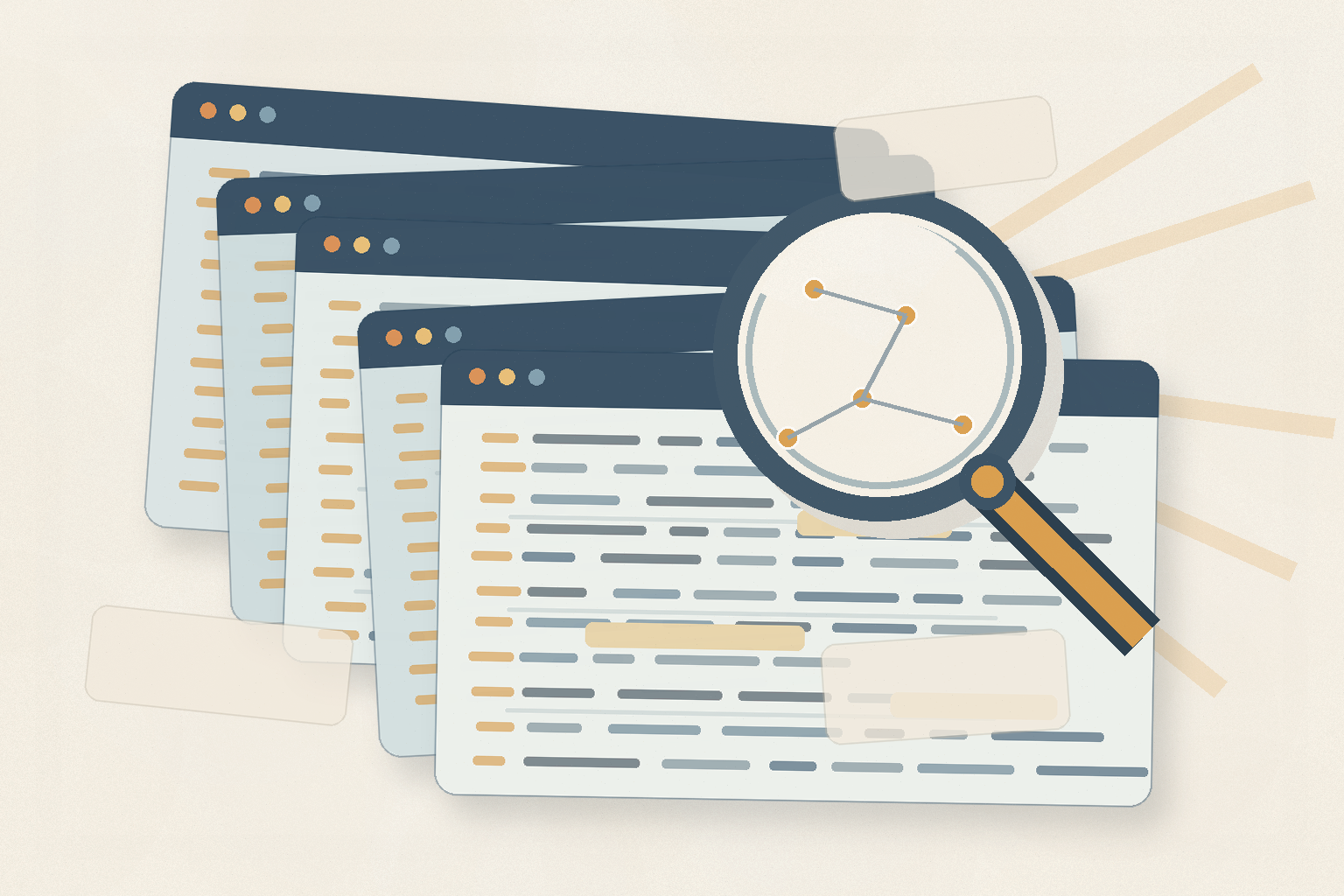 Reusable command history and session evidence make agent work reviewable instead of relying on a chat transcript alone.
Trust signals need to happen before merge time
The weak workflow is easy to recognize. The agent says the change is done, the user believes it, and the broken state appears later in a browser, test run, deployment, or customer report. By then the team is debugging not only the code but the conversation that produced it.
A better workflow asks for proof while the session is still active. Did the command run? Which files changed? What did the test output say? Was an approval needed before a risky shell command or broad edit? Those questions sound procedural, but they are the difference between using an assistant as a helper and letting it become an unobserved production actor.
Provider churn should not rewrite the workflow
Several rows in this queue point to the same pressure from different angles: speed changes, billing changes, quota limits, setup confusion, and trust in model output. None of those can be solved by loyalty to one provider. They need a layer above the provider that remembers the project rules, records what happened, and lets the team change engines without changing the whole operating model.
This is also an onboarding issue. A new developer should not need to reverse-engineer the last twenty prompts to understand why an agent made a change. A lead should not have to ask which model was used, what files were touched, or whether tests ran. The workspace should make those answers boring and visible.
What this row should turn into
The post-worthy idea is simple: AI coding tools are becoming production infrastructure, and production infrastructure needs boundaries. The more valuable the model, the more important it is to control when it runs, what it sees, what it can touch, and what evidence it leaves behind.
The teams that get value from coding agents will not be the ones with the longest chat histories. They will be the ones with the clearest operating layer around the model.
This matters because agentic work fails sideways. The failure is not always a bad patch. Sometimes it is a missing constraint, a hidden quota, an unreviewed shell command, or a session that cannot be reconstructed after the fact. Controls are not bureaucracy in that environment. They are the mechanism that lets the team keep using the agent after the novelty wears off.
Source signal: https://www.reddit.com/r/ClaudeAI/comments/1unqpnr/